Your American Beef Might Not Be American
Episode Details
Transcript
Today we’re digging into a claim that should make every BBQ fan and beef buyer stop scrolling: “Product of USA” doesn’t always mean the beef was raised in the USA.
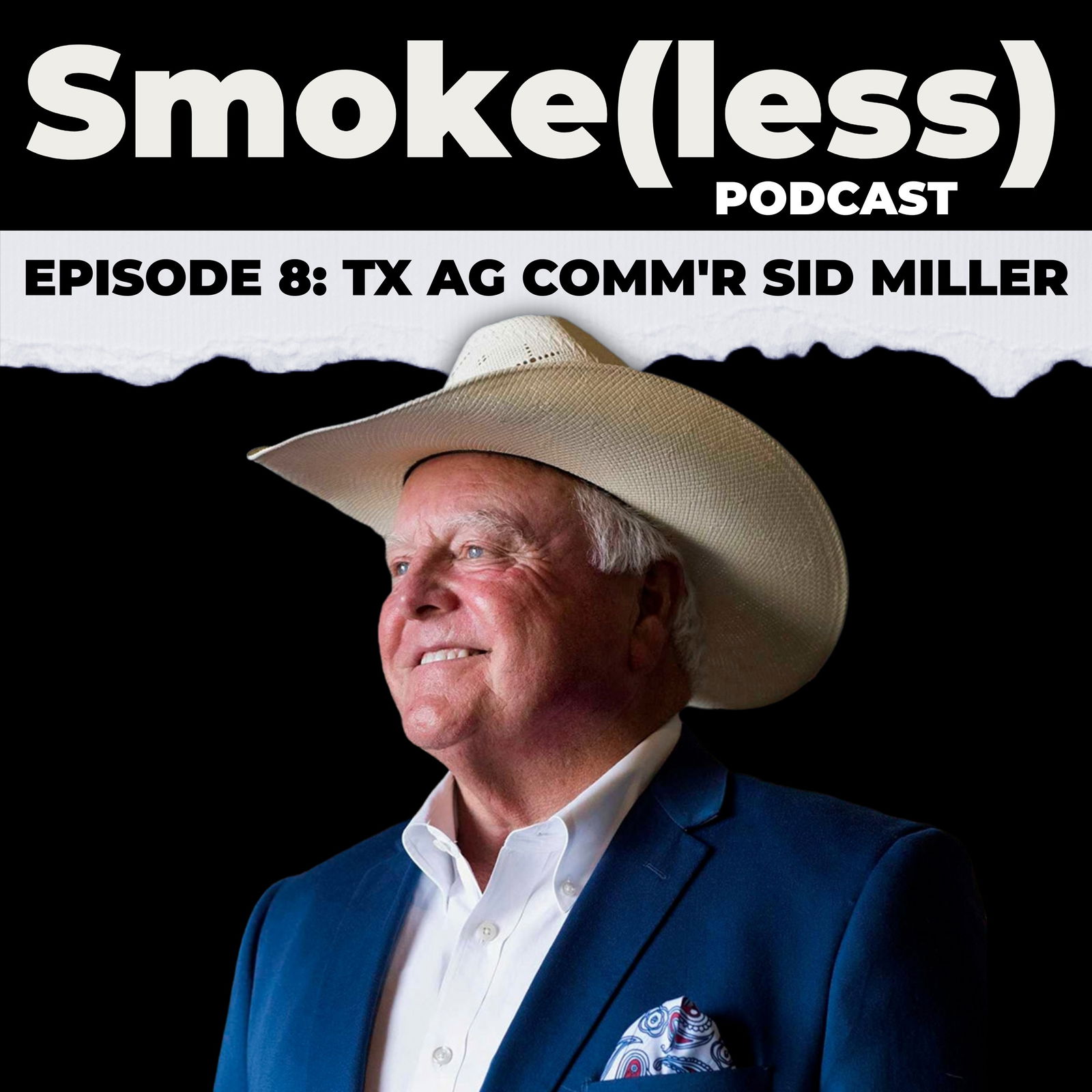
In this episode, we talk with Texas Agriculture Commissioner Sid Miller about the labeling loophole, imported beef, and why brisket prices feel impossible right now, and what can be done to save Texas BBQ.
Drop a comment: Have you noticed beef prices where you live, and do you trust “Product of USA” labels?
Sid Miller
We are buying fifty billion dollars more food than we're selling. That means now that we are dependent on foreign countries to feed us. Avocados come in from Mexico, that's product of Mexico. Now this beef from Argentina doesn't follow that. When that beef comes comes up from Argentina. They can grind it up in the hamburger and package it and sell it as product of USA. That's horrible. If we wanna lower the the price of beef so y'all can sell brisket, we can do that overnight. Nick Pencis
Hey, everybody. Welcome back to Smokeless. I'm Nick. Of course, we're here with Justin joined today by the commissioner of the Texas Department of Agriculture, mister Sid Miller, who put out a press release last week calling for urgent action to save Texas barbecue. Commissioner Miller, thanks for joining us. Sid Miller
Thank you. Nick Pencis
We're coming off of a deep dive conversation, with Bill Bullard, who is the CEO of RCAF. He didn't pull any punches. He called the current beef market functionally broken and warned that the chickenization of the cattle industry, where ranchers basically become low wage employees for the packers is nearly complete. We're all certainly glad that you've pivoted from focusing on regulating our our scales in our restaurants and instead stepped into the ring with your save Texas barbecue and, America First beef policy initiatives, which are calling for emergency action to protect our state's cultural treasure. But here is a problem for a Pitmaster brisket is non negotiable, cornerstone of our menu. It's also our lowest margin item. The guys working Texas's barbecue pits are looking at a three to five year horizon before the US cattle herd can recover and prices might level off. What is the emergency action for barbecue joints that need to make payroll this month while our customers are walking away from a brisket plate because it's simply too much. We wanna know if the state of Texas can actually move faster than the federal government to help us keep our doors open, and if so, how? Sid Miller
First thing I, you know, very seldom that I disagree with with, president Donald Trump. He said he's gonna lower the price of eggs. Price of eggs came down. He's gonna lower the price of gasoline. It came down. Says he's gonna lower the price of beef. I you can bet he's gonna lower the price of beef. I just have a disagreement on on how we do it. Okay. He he, announced that we're gonna quadruple the number of imports, beef imports from Argentina. Well, that's two problems with that. Number one, that's not America first. That's not, you know, building American jobs and and showing up the the ranching industry. Two, it adds to our agriculture trade deficit of fifty billion dollars. First time in my lifetime, we have an agriculture trade deficit. Thanks to Biden, his his crew didn't sign one, marketing agreement. None. Not not any new ones, but he also we lost our current customers. So America's always been the breadbasket of the world. We feed ourselves and a lot of other people, but not under Biden. We are buying fifty billion dollars more food than we're selling. So that means now that we are dependent on foreign countries to feed us. That we've gotta turn that around, and we're working real hard with the Department of Agriculture to make that happen. So it it's not America first, and it increases our agriculture trade deficit. But I didn't just complain. I had some suggestions how how we can rebuild the beef herd. I said, number one, we're still in drought. We don't have any place to when we run out of grass, we have to sell our cows. They go to slaughterhouse, turn them into hamburger. So another thing that Biden did was, cancel grazing leases on federal land. So now we have twenty four million acres of idle grazing lease. So I suggest we first thing we can do is open that up so we have a place to put our cows and and, maybe even keep back some, heifers to to, you know, build a cow herd. So they did that. They opened five million acres. I think they're fixing to open some more of that. So that's good. A good first step. Now we got a place to go to the cows, and we don't have to sell them. Number two, I suggested to give an incentive to, ranchers, to hold some heifers back and build a herd. And I suggested a heifer retention tax credit. It's not a bailout, not a subsidy. It's just simply take five hundred dollars per head and and, take it right off your income tax. Just give yourself a deduction. Some of these ranchers are finally making some money, and they or do they ever deserve it. They could use the tax break. If you'll give them five hundred dollars a heifer, they'll hold some back. I promise you. And and the herd will start rolling. That's that's the best thing we can do. And then, you know, I told him, look. We we gotta be transparent. We gotta be truthful with American consumer. You know, every product you buy, with the exception of two, has country of origin of labor. Avocados come in from Mexico, it says product of Mexico. If you buy grapes from Peru, it says product of Peru. Now this beef from Argentina doesn't follow that. When that beef comes up from Argentina, they can grind it up in the hamburger and package it and sell it as product of USA. Right. Can you believe that? That's horrible. Nick Pencis
Right. Sid Miller
We gotta stop that. Do the same thing with pork. So people go buy Argentine beef thinking it's it's from the greater American ranch. It's not. And it's low quality. It's terrible. Actually, the only thing we're we're buying is is is, lean. And we'll mix it with with American tallow, American fat, because we've got lots of fat cattle, or trim off off our fat cattle. So it's two two genetically different types of meat, are gonna be mixed together and sold as product of USA. That that has to stop. And then we we need, a lot of these profits are not from the the rancher, but but from the packers. So I requested that Trump do an investigation on on the four big packers, especially the two foreign owned ones, for, you know, price fixing collusion, monopoly, and they act they're actually doing that too. There is an investigation in big packing companies to see if they're, you know, dealing us a good hand or not. And they they may or may not, but we will we'll get to the bottom of it and find out. That seems to be Justin Fourton
a big part of the problem is is the imported beef. You know? And they're they're bringing that in at a discount, but still charging the premium prices for it. And it's hurting the ranchers, and it's hurting the consumers and the restaurants. The only people benefiting from it are the are the packers. Well, Sid Miller
I'll I'll I'll I'll make a prediction. This this beef that we're gonna bring in from Argentina, the margins will be made by by the processors. It won't be a saving to the consumer. It it just won't I just don't I don't think it's gonna drop the price for Hamburg. It certainly hadn't yet. So we'll see. And it's it's really in the big scheme of things, it's it's not a significant portion of of our hamburger supply. It's less than one tenth of one percent. So, you know, it's really hard enough to move the minute needle. The only thing it's gonna do is make make the beef processors a little more money. Nick Pencis
You use the word racket to describe the control that the foreign owned meatpackers have over our food supply. And as the agricultural commissioner for the largest cattle producing state, do you believe that Texas has the antitrust teeth to go after the packers independently if the DOJ can't get it done? Sid Miller
Well, I don't I don't it doesn't really need to happen at the state level. It needs to happen at the federal level because, you know, there's there's a lot of feedlots in Nebraska, Oklahoma, Colorado. I mean, we're not the only ones that feed cattle. So if you're gonna get it right, we need to go every to every plant where where they're doing this and and hold them accountable. Nick Pencis
Yeah. Wayne, you had you had a great point about that earlier. Wayne Mueller
Thinking about this as as a Texas institution, at least barbecue establishments, even though this is anecdotal, I don't actually have numbers to to substantiate this. I know that a lot of a lot of us will receive our our brisket, from, say, Cisco or Benny Keith or Performance. And these these supplies come from one of the four packers, and they generally seem to come from out of state. Nebraska, Kansas, maybe even Iowa. Nick Pencis
Colorado. Colorado. Wayne Mueller
Some from Oklahoma. How can initiatives here actually affect the prices that we're seeing that we're purchasing, that we're buying? And that may have a lot to do with just the Angus, variety or the Angus program that we're buying from. Do you have any input on that? Sid Miller
Well, we we do some things here here in Texas a little different to promote locally grown, you know, locally sourced. We have a marketing program called called the Go Texan program. Mhmm. And it it's a it's a branded program, and you can assure if that our logo, it's Texas with a circle around it, that that is a Texas product. If that's a Texas brisket or or Texas meat, we, you know, and we're encouraged a a lot of, farm to to consumer, selling. I matter of fact, I have changed my my cattle operation. I I used to just, raise cattle and and sell them at the local auction barn, but now I've I've raised f one Wagyu, and I've got my own little feedlot, and I've I've feed them out and sell them directly to consumer. I get a premium for it, and they get a they get a better buy than they could get, you know, buying that premium beef at at the grocery store. So we both win. So we're doing a lot of that to try to try to get around these these big packers. We've got a lot of, independent, packing plants that have have popped up across Texas. Those are increasing. So we're we're encouraging that. And, you know, it it all changed after after COVID. I I call them COVID mothers. They wanna know where their food comes from, and they wanna know what's in it. And so they're this, locally sourced, local supply is a thing that's, that, you know, we we can if if you wanna do a little extra work, it's it's not, you know, without a little extra effort, we can capitalize on that. Wayne Mueller
The problem that we have with that is, generally speaking, the smaller ranchers and the niche or cottage ranchers just don't they don't process enough cattle for our needs for us to be consistent across the board on that brand. I mean, there's only two briskets per cow. Nick Pencis
Yeah. Wayne Mueller
So, you know, if you're only processing a hundred cows a week, then it doesn't really help us. Sid Miller
My point was I wasn't just specifically saying brisket, but, you know, a a family of four can can buy half a beef, and they'll get a they'll get a brisket with it, but they'll also get some roast and steaks and and fajita meat and everything else that they, you know, that they will that they'll need to feed their family. Nick Pencis
Mhmm. Sid Miller
And it's locally sourced, and they know they know what's in it. No antibiotics, no hormones. It's grass raised and grain fed. So it's it's it's a superior beef. Gives us another outlet was the point I was trying to make. Nick Pencis
And I guess that's that's Texas's version of mandatory country of origin labeling having the the Go Texan, program. Right? It's telling everybody where it comes from. But I'm I'm curious. Bill Bullard said that the mandatory country of origin labeling was was one of the first and most crucial steps to to try to change the tide here. During the brief window when when McCool was mandatory in twenty thirteen and twenty fifteen, American beef was actually, you know, earned a premium because consumers had the information to choose that. And I'm wondering if if you can succeed in making, the country of origin labeling mandatory again. We're worried that it might make the price go even higher. You know? Or do you believe that the market transparency would balance that out in the long run or, you know, like, could it backfire? Sid Miller
Well, I I don't think it'll make that much difference in price. And a matter of fact, consumers will probably pay a little extra to know exactly where where their meat's coming from. Nick Pencis
Okay. Sid Miller
It's, we actually have they the Biden administration put in a country of origin and piece of legislation. The problem is it's voluntary. I mean, it's it's useless. It's absolutely useless. We have a country of origin labeling on on beef and pork now, but it's it's strictly voluntary. So, you know, no one has to do it. They're not gonna do it. It just doesn't Mhmm. It's just Wayne Mueller
it wasn't a fix. I noticed that one of the things that, my that you had suggested and you just talked about is opening up government, state owned grasslands, for grazing. Is but the drought in South Texas seems to have a big impact on both all sorts of agriculture in the valley. Correct? Not only that, but Mexico not fulfilling its our water treaty, and so we're having problems with that as well. I think one of the one of the suggestions you had was maybe desalination. Sid Miller
Well, we're doing that. There's actually twenty cities across Texas that are using desal. None of them are on the coast. I live close to, a city called Granbury, Texas. They're it's on the Brazos River, and they have Lake Granbury, but you can't use the water out of that. The Brazos River is salty. You can't irrigate out of it. You can't but So they put in a a it's not as salty as ocean water, so it's pretty cheap to clean up. So they put in a desal plant, and they're now they're able to use their lake water, which was not an option before. We went into war with Mexico. We finally got them to come around, thanks for the so Donald Trump's tariffs. He'd threatened them with tariffs. They are now releasing water, that they've held back. They've agreed to pay their their, overdue bill and and complete the the next five years in a timely manner. So like there's two lakes on, the Rio Grande River, Lake Falcon and Lake Amistad. So in the last two, two to four weeks, though both those lakes have risen about two foot. That's that's a lot of water. And not only are they releasing water into the lake, they usually, they would own half water in in the lakes, and they've given us a large portion of the water that's in the lake that that rightfully was theirs, but they're beating it over to us. So Justin Fourton
What do you think are are are there any specific actions that the federal government needs to take in terms of addressing this with the the beef packers? I know that that there have been a number of lawsuits and settlements in the past that didn't seem to have an impact. What do you think what do you think needs to happen in order to really turn this around? Sid Miller
Well, you're you're absolutely correct. There there's there's been some, civil lawsuits, big fines paid, but not big enough to hurt those guys. So this this is a federal investigation. It's not a it's not a civil suit. So they they, you know, possibly come in and break up the monopoly is is what the final outcome out of it could be. Now if if if we wanna lower the the price of beef so y'all can sell brisket, we can do that overnight. I don't know if anybody has the courage to do it or not. Our cow herd, we get about fifteen percent of it every year from Mexico. They just walk over. We we buy those stocker calves. They run on our our wheat fields through the winter, and and we graze those out. Some of them will go straight to the feedlots. We'll fatten them up, feed them our corn, use our labor, and then we sell that meat back to Mexico. Well, we've got a invasive pest called the screw worm down here, and November twenty fourth, we shut it down. We opened it for less than a week. Every year, we get about a million two hundred thousand head. So we're starting our second year, about four months. So we probably got a million five hundred thousand head back up down there that we could bring over and, fill our feedlots back up. Our feedlots are running sixty, seventy percent capacity. We actually closed a packing plant in Nebraska because there wasn't enough cattle to to keep it operating. Nick Pencis
Right. Sid Miller
We've got we usually run two shifts in Amarillo. Wayne Mueller
Got it. Sid Miller
They're cut back to one shift, laid off seventeen hundred people. So the cow calf guys, you know, scream bloody murder if we open that border up, but, actually, it will hurt them in the long run too. Long as it's closed, cattle will remain high. But at some point, Mexico's gonna scratch their head and say, hey. What are we gonna do with all these cattle? We need to expand our own feedlots. Let's build some more feedlots. Let's grow our own corn. Let's feed our own cattle. Let's process them down here, and then we lose one of our best customers. And then we're worse off than we were before. So we can open that border up. There's some antiparasitic drugs like ivermectin. Everybody remembers that from COVID. It has a residual, like, forty eight days. We've got another one called Dectomax. Works very similar, and, that will prevent any infection of screw worms or cure any if they have them, actually. So we could, have a protocol that anything comes in has to be dipped for for for ticks and parasites, but it also needs to be injected with this, ivermectin, product like ivermectin. And we matter of fact, I proposed a, pilot program to do just that. Instead of just opening the border and and bringing across, you know, million to two million ahead and and, flooding the market and not sure that our protocols are working, We get our rodeo cattle out of Mexico for the team roping and steer wrestling and and things like the horn cattle. And there's about fifteen thousand of those down there, not two million, and we need those. They they last us about six months. We have to get some more. So we've been without about eighteen months. So we're having to cancel a lot of events because we can't get the rodeo start. So I said, let's open it up on a trial basis to these, rodeo cattle, these Corriente cattle. That's what you the the breed is Corriente, And, bring them across. Let's see if we can get them across safely without infecting, you know, herds with with the screw worm. And I while we're at it, let's just open it up to horses. We only import about eighty horses a week. Surely, we can get, you know, make make that happen without without, you know, dropping the ball. So they were about to do that and about had them talked into it. And then the screw worm moved about eight hundred miles north and showed up just south of the Rio Grande River. So that that's off the table now. We might get back to that if we can stabilize it or or, push this screwworm back down into southern Mexico. Justin Fourton
The decision to to allow those cattle to come in, is that is that the decision made within the state of Texas, or are you working with the federal government to Sid Miller
get that No. Justin Fourton
It's it's Sid Miller
it's a it's a federal and it's a USDA decision. I run the export pens. Any any cattle, any livestock that leaves Texas, goes through my export pens. I do not operate the import pens. USDA operates the import pen. Just two two separate operations. We take care of the exports. Federal government takes care of imports. So it would have to be at, Brook Rollins level, secretary of the USDA. Nick Pencis
Do you think we're doing it enough to fight the screw worm? Is that I mean, is I know that this was a problem in the seventies, and then it was eradicated, but it seems like the numbers of of sterile flies being released right now is is much lower than it was. And, you know, the USDA said that it could cost the industry a hundred billion dollars due to animal deaths and movement restrictions. Is is the border secure enough right now to protect Sid Miller
the herd? No. No. It's not. And we have the the technology to secure it, but, we're just not doing it. People have said over and over that we eradicated the screw worm using sterile flies. Well, actually, we didn't. That's not that's not how we eradicated it. In nineteen seventy five was the last time we had them. We had twenty nine thousand cases in Texas infections, twenty nine thousand infections. And USDA developed a fly bait just like you can buy at the hardware store. Nick Pencis
Mhmm. Sid Miller
And they deployed this, screw worm fly bait and killed ninety five percent of the screw worm flies. Then they came in with the sterile flies behind that and and cleaned up the rest of it. So in the summer of nineteen seventy five, twenty nine thousand cases, we put out the fly bait. In the spring of seventy six, we had forty seven cases. We wiped them out. But USDA is reluctant to use, the fly bank. I met with, Mexican officials. Officials from all eleven, Central American countries came to my office. I sat down with them. I laid out the research, showed them how the formula was put together. They were elated. They'd been trying to make a fly bait, you know, this whole time. Well, unsuccessfully, they were trying to use liver. Liver is just not, this is a a man made product, just a ten ten item right off the shelf that you mix together. And, so they took, they took my research information back, and, hopefully, they'll come up with the bait on their own. So far, USDA has not embraced putting out fly bait. Nick Pencis
So I I wanna reroute just a little bit and get back to the, barbecue specific conversation. You know, we've we've lost some barbecue joints since the beginning of the year already. It it's a pain point that a lot a lot of folks are talking about, you know, how how will we be able to survive this long with kinda no clear light at the end of the tunnel. You know, the post COVID governor Abbott participated and still does in the music Texas music incubator rebate program, which is a state level tax rebate to protect live music venues. What if Texas barbecue is truly heritage and an economic engine, why not a similar capped performance based rebate for barbecue joints during extreme cattle cycles? Is that something that's been talked about? Sid Miller
Not really. Texas is just, you know, we're different than a lot. A lot of other states would embrace that and do it. Texas, we just don't we just don't subsidize businesses. We don't subsidize farmers. We really don't subsidize anybody. It's just just kind of the Texas thing. You know? You gotta you know? And a lot of Texans won't take charity. They just don't, you know, don't wanna hand out. The farmers you'll ask them, say, no. I don't wanna hand out. I wanna I wanna make a profit. That's how I wanna stay in business. The problem in Texas is, you know, brisket's king. Other than the states, East Coast, pulled pork, everybody loved it. Not here. I mean, it's brisket, baby. This is brisket country. We don't eat pork. Yeah. We'll we'll we'll sell some sausage. We like our sausage, but it's it's mainly a brisket brisket steak. That when you talk barbecue Right. It's that brisket that pops in your head. Not not not chicken, not pork, not salt. It's brisket. Justin Fourton
And then we you know, we've talked about that, and they've looked at a a bunch of different ways to try to diversify the menu. And at the end of the day, sixty percent of our food cost is brisket, and that's that's the one thing that everybody wants when they come through the door. It's impossible to eliminate, you know, and still have yourself be considered a Texas barbecue place. Sid Miller
That's what I ordered, and I like mine moist, guys. I don't like Justin Fourton
the trash. Sid Miller
I like the moist. Justin Fourton
You've done a lot to point a spotlight on this issue with the press release and and some of these initiatives that you've put out there. What what can we do or, as a community, a restaurant community in Texas to help raise the profile of this with the federal government to try to have some action that that will get us out of this problem faster than three to five years it takes to rebuild the herd? Sid Miller
Well, the herd is actually on the rise in Texas. We're rebuilding our herd. The numbers show that. Other states still are. So, unfortunately, there's not a quick fix. You know? We got the price of eggs down real quick, but, you know, one hen will lay an egg every day, and it takes twenty eight days to hatch it out. So one hen can be responsible for three hundred three hundred and fifty more chicken than a year. A cow, it's one calf per year. So it's Uh-huh. A slower process. Nick Pencis
And then three years. Sid Miller
We we have to start. We we could actually if we did that heifer retention tax credit, you know, those heifers would would have calves in eighteen months to two years. That would that would really help. If we open the border, that would be two million head. That would really, really help. So that those couple of things will probably make the biggest difference in the long term rebuilding the herd. Justin Fourton
Is it do you consider the tax credit to be similar to a subsidy, or do you think that the ranchers do it that way as a handout, or do they Sid Miller
they do Justin Fourton
that as a benefit? Sid Miller
You know, a a subsidy is taking, you know, money out of the treasury and and writing you a check. Justin Fourton
Okay. Sid Miller
That's not what that's not what I'm talking about. What I'm talking about is when you get to the end of the year, well, let me let me put it a different way. So the average, couple raising kids, They fill out their income tax, and they get ready to turn it in. They get a child tax credit of a thousand dollars for every child in the house that's under seventeen years of age. They wouldn't say that's a subsidy. They say that's you that's a you know, I'm I'm getting a a tax credit. I'm getting a write off because I'm trying to raise these kids, and America wants me to help me raise these kids. So it's it works like that. When you get to the end of the year and and you you've kept ten heppers back, we're gonna re just take five thousand dollars off your income tax. Justin Fourton
Mhmm. Sid Miller
So it it's money that never really hits the treasury. It just stays in your it doesn't come out of your pocket. It goes to the treasury and come back. It just stays stays in your bank account. Nick Pencis
But as you said, those calves would still not be here for a a few more years. So that's between now and then at a rate that we're losing barbecue joints now. You know, it's how are we supposed to keep our head above water while keeping the tradition of Texas barbecue at the level where it is where people literally travel from all over the world to come and eat here. And Sid Miller
All I can tell you is there's four million briskets standing on the Rio Grande River down there, boys. Justin Fourton
We got we need to get them we need to get them over here somehow. Yeah. Well, you you mentioned earlier that that the price of brisket could be lowered overnight. What what were you talking about there? What what was the mechanism for doing that? Sid Miller
Well, bringing these cattle in from Mexico. Justin Fourton
Okay. Sid Miller
You could actually crash it. I mean, the the market could they'll go off the limit. If you, you know, if you just open it up and said bring them on in, oh my gosh. It would go it would it they would be a wreck. We don't want we don't want that. We want it incremental, you know, a little bit at a time, spread it out over four, six months, and, let let the industry absorb it. We just can't open the floodgates. We'll, you know, we'll wash the whole city a little. Nick Pencis
I see the benefit in it, but it just seems like it could drive the prices higher in the long term because of, again, of the biological lifestyle cycle of a calf and what it takes to get it to market. Sid Miller
You're talking at least twenty eighteen to twenty four months Nick Pencis
Right. Sid Miller
At the fastest and realistically could be eighteen to or twenty four to thirty two, thirty six months. Wayne Mueller
So what grade are most of the cattle in Mexico that would be brought over? Are they mostly select? Sid Miller
I I I get I get that a lot. These the cattle that come up here are with exception of the I talked about, most of those, they have improved their herds. They've come up here and bought our bulls, and they but we've sent them semen. We've sent them embryos. They've really improved their herds. Those cattle that come across are equivalent to Texas cattle for the most part. I'd say ninety percent of them will will great will great choice, coming out of the feedlot. Wayne Mueller
They're bred they're bred for for dry climate. Right? Sid Miller
Right. Wayne Mueller
So they're not gonna put on a lot of fat generally. Sid Miller
You'll see a lot of, Charolais, Red Angus, a lot of a light colored beef breeds, European breeds. Not a lot of Angus, because of the heat down there. And a lot of them will have a a little bit of ear. But used to, they would be brown Swiss and Jersey crosses and, you know, just yeah. Standard about the best that they would grade, but they've really improved their herbs down there. There's it's not that way anymore. Wayne Mueller
In order for people to enjoy moist just like you like it, it has to be a high choice or or better. And and so even though there is a lot of brisket that's sitting on those cows just south of the border, there may not be many that we can utilize. Sid Miller
Oh, I I think the quality on them, you you utilize them. Mhmm. And another thing we hadn't really talked about, but the briskets are a lot bigger than they used to be. I don't know if y'all noticed that or not, but, usually, the the cattle coming out of the feedlot, we finish those around eleven fifty, twelve hundred and fifty pounds. But beef is so high now, we're feeding these cattle up to fourteen, fifteen, sixteen hundred pounds. They're they're monsters coming out. Now those briskets are huge. You know, you could split them, just about. They're so big. And so we're we we our cattle numbers may be down, but our poundage is not down proportion because we're we're we're we're that same animal is producing another twenty to thirty percent pounds of beef overall coming out of the feedlot because they're we're just letting them grow a lot lot larger because of the shortage. Wayne Mueller
I know that also provides a a challenge for steak houses with their their standardized cut sizes. Having having extremely large lobes means that they have to cut their each hand cut steak thinner than they used to. Sid Miller
That's true. Wayne Mueller
Just just to meet the weight sizing, which then makes it more difficult to to prepare a medium rare steak over just a medium well steak. You know? Going outside of standardization, even though, yes, there's there's greater tonnage that's coming through in processing, it isn't doesn't necessarily transfer well. Even for us, bigger briskets isn't always better. Sid Miller
Right. Right. Wayne Mueller
You know, our our processing, the way we cook, and our cook schedules are really dependent upon having a a fairly tight window, you know, say, a ten pound to fifteen pound brisket size. Outside of that, it starts taking too long, which now we have to incur higher labor costs. Nick Pencis
Mhmm. Wayne Mueller
And we have higher loss yields just because of more fat more fat loss. Sid Miller
That's right. Wayne Mueller
So so that provide it it just it complicates our formula, our prime cost a bit more by having these larger briskets. And we go through that seasonally. We see it in the in the wintertime. We'll oftentimes see larger briskets come through than we do during the summertime. Particularly, if, you know, those of us using Black Angus where those cows just don't like to eat when when it's hot. The challenge is what they're very nuanced that we're that we're facing. It's not an easy predicament to be in. We appreciate any and all assistance coming from any source at this point in time to try to help us, you know, alleviate some some of these pressures. And I think we all agree that at some point in time, adjustments are gonna have to be made if we plan to stay in business long term if to accommodate even size differential just to make sure we can keep that product on the menu consistently. It's just one more challenge for us. I don't I don't know that everybody is prepared to to take on. Sid Miller
The problem is no one else has grain fed cattle like like Texas and and rest of American states do. Wayne Mueller
Yeah. Sid Miller
So if we imported brisket from Brazil or Australia Wayne Mueller
Yeah. It's not gonna be it's not gonna Sid Miller
It's not gonna work. Wayne Mueller
Nope. We'll have to turn to hot and fast grilling kind of South American style beeferies. We'll go from barbecue to live fire. We'll have to transition that direction. Nick Pencis
Well, commissioner, you're talking to potentially hundreds of barbecue joint owners all over Texas and everywhere else who listen to this podcast. What do you say to them, any who are struggling to make payroll, having staffing issues, trying to do everything to keep the lights on? What's what are the next three to five steps or the very first impact we'll see? You know? Like, what's what's the message of hope for for the barbecue point owners in Texas? Sid Miller
The message of hope is that the beef herd is growing in Texas. Okay. And it's and it's gonna start soon in in other states. I would encourage you to be, you know, think outside the box, you know, to try to come up with with, you know, new innovative ideas, you know, to to increase your you know, maybe start a delivery service, maybe I don't know. Nick Pencis
Bullport. Sid Miller
Some kind of specialty, holiday meats, you know, package you could put put out there. I don't I'm not in the barbecue business. I'm I'm I'm in I'm in Wayne Mueller
the Sid Miller
farming and ranching, but same principles apply. You know? When when when times gets tough, you you gotta change your ways. You gotta do something different. You can't do the same thing over and over again and expect expect a different outcome. So but I tell you what, Texans are really, in in barbecue people right in they fit right in there. They're really resilient. We hit challenges, and Texans figure out a way to make it work. We may lose a few of them, but most of them, they'll make it. I promise you. They'll make it. They'll figure it out. They'll they'll adapt. They'll overcome. They'll improvise, and, they'll they'll meet the challenge. Justin Fourton
And this has been very helpful, and we appreciate everything that you're doing to help us. Wayne Mueller
Yeah. Especially bringing notoriety to the problem. Understanding that, you know, there are larger forces that can potentially help us in in some way or fashion, short term, long term, whatever, gives us more hope, helps us, you know, keep striving and not just be so quick to cash it in. Sid Miller
Guys, I'm I'm doing everything I can, coming up with every idea I can think of. You know, every every tool in the toolbox, I'm I'm throwing at this problem. And, they're they're taking some of my ideas and and some of them they're not, but, I didn't I don't see anybody else doing anything. I mean, it's just nothing's happening. Somebody's got we gotta try something even if it's wrong. We gotta we gotta get off our butts and get out here and hustle a little bit. Justin Fourton
We've been talking about this since August, and the problem's just gotten worse since then. And that's why it was such a relief to see your your Instagram post and to see that there was somebody out there that was paying attention and willing to do, something to take some steps to fix this. So Sid Miller
Well, thank you, guys, and and I wish you well. Hang in there. Good times are just around the corner. Nick Pencis
Thank you so much. Wayne Mueller
Yeah. We do hope so. Thank you very much. Justin Fourton
You bet. Nick Pencis
Well, guys, two two pretty great guests to give us some answers about the questions we've had over two episodes now. Do you guys feel any clearer about the situation? Or or I feel like I've learned a lot. Whether or not I know the answer to why, I I feel like I've learned a lot. Wayne Mueller
Well, that's part of what this this podcast should be about anyways. It's a journey of discovery. Right? Everybody's learning with us as we learn as we learn more. Sid Miller
Right. Wayne Mueller
And so this has been this has been great educationally, but I don't think this story is over. I think there's still more to be uncovered, especially how do we address it and what do we do about it. Nick Pencis
Yeah. Justin, say something smart. Justin Fourton
I mean, it it seem it seems hard to get a a clear cut answer, and and you don't have a clear view. Seems like there's a lot of smoke in rear mirrors right now. Mhmm. Wayne Mueller
And Justin Fourton
if we can clear that smoke and and get a clear view of what's going on, then then maybe we'll we'll make some progress. Nick Pencis
Yeah. And guys, listen, as always, we have an email address. You can hit us up, hello at smokeless podcast dot com. Send your comments, concerns to us at hello at smokeless podcast dot com. If you guys have shirts that you think you'd like to see Justin in other than the Green Hall shirt, send send the shirts to sixteen eighty West Commerce Street in Dallas. He'll get the shirt there. Although, I do love Green Hall, and I do love that shirt, and I do love Extra large. Yeah. Extra large. I'm not being a dick. I I love Justin with all of my heart, and I'm glad that he pulled over and made this happen today. He's he's on the road, y'all. He's on the road, but he did it. He's on the side of the street right now. We just gotta have faith and hold on, though. You guys now more than ever, still really important to support your local barbecue joint wherever it is. Please go buy some brisket, buy some gift cards, buy some stuff off of gold belly dot com. Have it shipped nationwide. It helps. I promise more than you'd ever know. Right, guys? Justin Fourton
Hundred percent. Nick Pencis
We're all on Goldbelly, so grab something on there if you want. Grab some beef ribs from the famous Louie Miller. Grab some of Justin's famous sausage. I'll be glad to send you some ribs or a mother clucker. I'll stop saying, probably won't stop saying, I'm gonna say, more. Does y'all wanna say goodbye or anything? Justin Fourton
See you all next time. Nick Pencis
As always, thanks for joining us on Smokeless. We'll see you next time.