Speaker 0
Beef is king, and it's expensive, but the consumer says it's worth it. This isn't a supply issue yet. The supply issue's yet to come. Import of beef in the long run actually make USDA Prime Choice and Select Beef more expensive, not less. Speaker 1
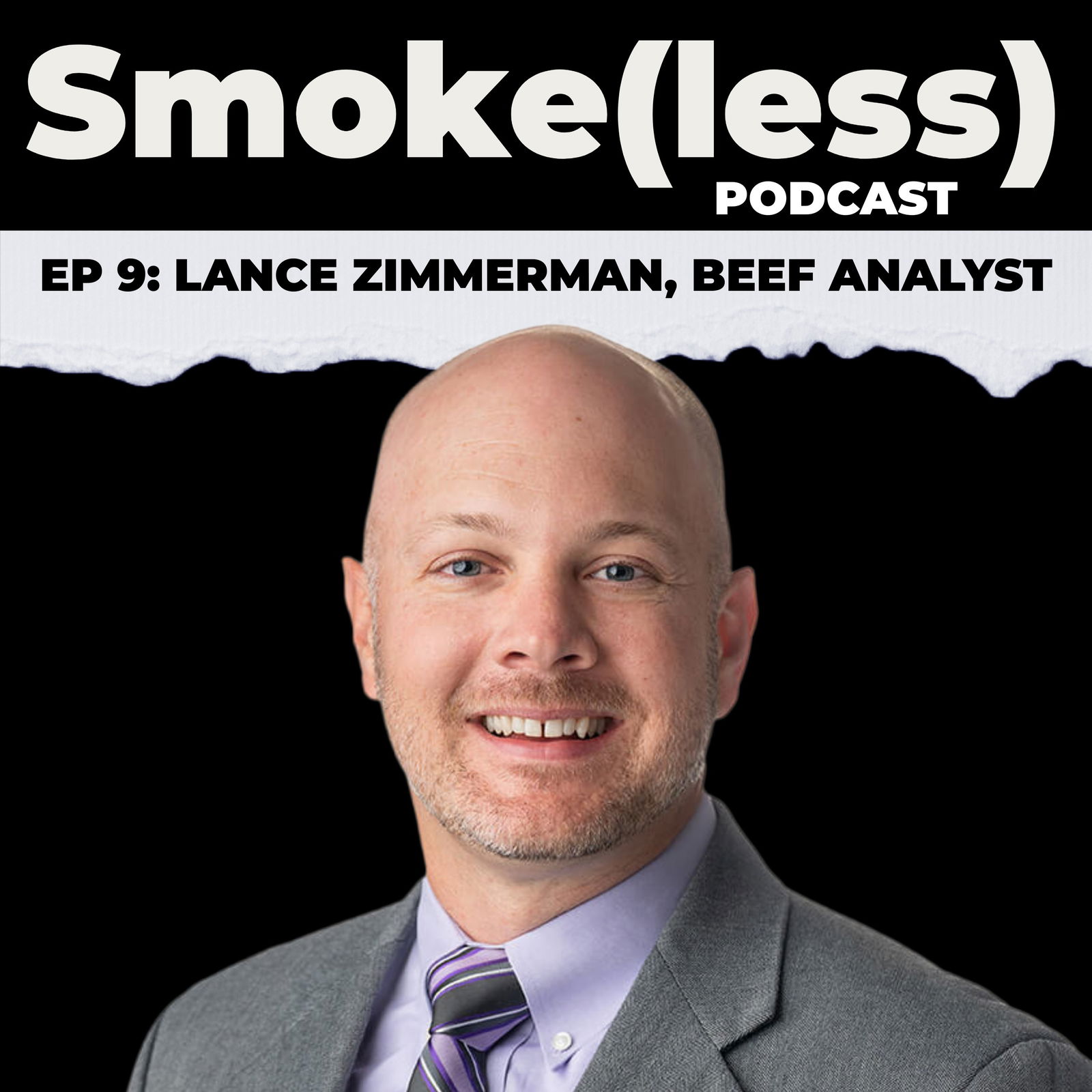
Alright. Welcome back to Smokeless. I'm Nick. I'm here with Wayne. Fortunately, Justin, could not make it. He had a he had a mission on American Airlines to take brisket to New York City, I think. So, yeah, we're just rolling with me and Wayne. And, we're deep into our investigation of the twenty twenty six beef crisis. And, in the last two episodes, we heard two very different explanations for how we got here. Bill Bullard from R CALF told us the market's broken. It's a rig system where packer power and imported product can keep prices high for us even when ranchers are getting squeezed. Commissioner Sid Miller came in swinging with an America First playbook. Rebuild the herd, label the beef, stop outsourcing the problem. But today, we're moving past the speeches and into the spreadsheets. Our guest today is Lance Zimmerman. Lance is the senior beef and animal protein analyst for Rabobank, one of the biggest agricultural lenders on the planet. This is the guy banks call when they need to know what's actually going to happen, not what people hope happens. Lance spent over a decade at CattleFax, and he also worked at certified Angus beef. So he understands the premium product that we live and die by. Lance, thanks for joining us. Speaker 0
Yeah. Thanks, Nick. Thanks for the introduction. And and perhaps maybe the most pertinent part of the introduction is, also grew up, on a farm and ranch in western Kansas and still a part of that today. My brother runs it. But we have a a farm in the western half of Kansas, with a hundred and fifty mama cows, and then we raise wheat and corn as well. Speaker 1
Lance, we we need a reality check. There's a bit of a paradox. If ranchers do what Bill and Sid want and start keeping heifers back to rebuild the herd, it's fewer cattle hitting the market in the short term, and those are the cattle we likely need for premium briskets. So are we all rooting for a solution that makes brisket even scarcer and more expensive before it gets better? Speaker 0
As a domestic beef supply, about two thirds of what we consume as beef in the United States is from our domestic steer and heifer population, and that is, born, raised, processed, all American. If it was born in Canada but ended up getting slaughtered and processed here, I'm not counting that in that sixty six percent. Speaker 0
And so the only way we can rebuild the herd is you gotta take, again, just like in the human side of things, most pregnancies are fifty fifty, steers and heifers over a large sample size. And the only way you can rebuild the herd is keep back some of those young heifer calves, develop them into mama cows. Speaker 2
It only goes in in a fractional basis. Right? Like, if we're really trying to rebuild the herd, you're not just taking a single generation and then taking the mother heifer and putting it into market just being replaced by the the heifer calf, it's only a percentage of those would possibly be going into market, the calves. Right? You're keeping still some more calf heifers to help increase at an increasing rate to herd size. Correct? Speaker 0
Yeah. I mean, I don't know how boss you you wanna get in the numbers. But, essentially, what we look at when we talk about growing the herd is we're talking about mature beef cows. So females in the herd that have had one or more calves. Right? And so as we look at those numbers over time, there's two metrics that we look at. One is called the culling rate of the nation's beef cow herd. And what that is is it's the January one USDA reported number of beef cows for January one twenty twenty six. It was just under twenty eight million head. And what we do is we look at, okay, based on that January one cow number, how many did we send to slaughter? The calling rates there today. Unfortunately, the percentage of heifers we're seeing across all those different stages in the production mix are still in the the mid to, low thirty percent areas, which isn't quite where we need it to be to be saying we're rebuilding the herd. And so as a result to your point, Wayne, we're still sitting here in a situation where the cow herd's basically steady to a little bit lower still as we look at where we've been both in twenty twenty five and to start twenty twenty six compared to where we were in twenty twenty four. Speaker 2
Okay. You know, if we come at this from the angle of of a barbecue restaurant and how this would affect us, we're really we're narrowing our our inquiry to a more premium product. High Choice Prime. Speaker 0
Speaking my language. Speaker 2
Which right. Your your CAB background, I'm I'm really interested in because they did some really incredible things. Speaker 0
Expensive to eat crappy beef. We you you're buying Choice or Prime or you don't buy it at all. Speaker 2
Right. Or right. At at least in in our industry because that's what we've become. We've become an extension of the modern day steakhouse. Like it or not, you know, we're a product of our own success in many ways. Speaker 2
You know? But but I think that how do what we're really looking at is the import beef isn't gonna really affect us as as far as I can tell. It's if it's mostly grind, it's it's lean meat that's gonna be used primarily as burger, etcetera, then that doesn't I mean, it doesn't affect what we do Correct. At all. So but what is gonna increase the herd size where we're at? Why is why are we stagnant when we have, you know, we still have a very strong demand for beef, maybe stronger you know, this is something I was trying to get at over the last couple of interviews as well is what is really driving that that increase for or desire for beef consumption? Speaker 0
Now you're hitting at it, Wayne. Speaker 2
Right. Right. I mean, because Yep. Is it diet? Is it profitability? Is it health? Is it taste? Is it yeah. Is it prestige? Speaker 0
Price is a function of two things, supply and demand. Right? Everybody's been saying, these high prices are because supplies are record low. Guess what? They're not. Cattle supplies have been drifting lower. The cow herd peaked cyclically in two thousand nineteen. It's bottomed in here in this twenty four, twenty five, twenty six period where, statistically, those numbers really aren't any different. The when you look at the errors the government publishes in their cattle inventory reports, it's drifted a little lower, but it's within the statistical error error of those all three being the same inventory essentially. But what really moves prices, and you alluded to this to some extent, is per capita beef supplies. And that's a fancy number that there's a few things that go into it. One, it's domestic production, slaughter times pounds, carcass weight equals production minus exports. We can't consume in the US what we don't have, plus imports, which usually those two are offsetting. They haven't been recently. Imports have been exceeding exports. And then we divide it by the number of mouths to feed in the United States. What nobody's talking about is that per capita supply number, while we can talk about the mix shifting a little bit, and you rightly identified that, per capita supply has been almost flat since two thousand nineteen, between fifty eight and fifty nine pounds a person. And so if supply is flat and prices are record high, you hit the nail on the head, Wayne. It's demand that's driving the record high prices today. Demand is the highest it's been this past year, twenty twenty five, since nineteen eighty three, but numero uno is we improve marbling. Today, you buy beef. As a consumer at the retail store, it's the highest quality beef on average you've ever had in your lifetime. We produce it's, like, six it's over six pounds of prime and choice beef in the US for every one pound to select. Back up to two thousand and five, it was one and a half pounds of Prime for one pound of Select. And one of the problems that we all have when we talk about price is we wanna talk about it in isolation. And I wanna shake people when they do that. Because here's the problem. You and I, none of us, darn well, better be making the same amount of money today as we did ten years ago. Right? It's not a good trend. Beef prices have actually when you convert retail beef prices, not just brisket prices, but retail beef prices to a minutes worked per pound of beef, it's creeping up towards the highs when you look at those metrics. The highs we would have seen both during the pandemic and back in twenty fourteen and fifteen, but it's not outrageous. And the other part of it is and this is where your guys' struggle really becomes, how should I put this, a challenge. Retail's whooping restaurants butts right now in terms of value delivery. Mhmm. And so if you're Jill or Jane consumer, and I'm gonna use a steak as an example, you wanna buy a nice upper two thirds choice prime strip steak at a white table cloth restaurant, your starting point is probably seventy five bucks for the steak. You're probably still buying the sides at a really good restaurant. You're certainly still buying the drink, and then you have a twenty percent tip if the the staff does their job well. Right? Maybe more if you're a generous tipper. That same steak cost you twenty five bucks at the grocery store and a little bit of time. Then you go buy ten dollars a side. You have you a nice lowball, with with some bourbon over an ice cube in it.
Speaker 0
You're probably talking a thirty five dollar meal at home. Thirty five dollars versus what's easily a hundred hundred and twenty five dollar total bill per meal at restaurant, relative value. Retail is kicking restaurant's butt at the steak level. And so what I tell folks in your guys' shoes, quit worrying about price because we're not selling lead today. We're selling gold when we put it on a plate, and it's justifiable. And the consumer's saying, yeah. Dang it. Beef is more expensive than that pork butt, which I love a good pork butt done well. I love smoked chicken wings. We do them here at my home. The most underrated protein to cook on the smoker is boneless skinless thighs. But beef is king. And it's expensive, but the consumer says it's worth it. This isn't a supply issue yet. You guys are hitting on and eluding on the supply issues yet to come. Right now, it's just record demand.
Speaker 1
So whereas Wayne asks really super smart questions, I'm gonna ask the really dumb question here.
Speaker 0
No dumb questions, Nick.
Speaker 1
But How do you measure demand?
Speaker 0
We can count cows. Mhmm. We can count slaughter. We can count beef production. Slaughter times carcass weight. We can even get whittled down to that per capita supply metric I talked to you about. Demand is different because it's not per capita consumption. Per capita consumption is actually a supply metric. Demand is not just price because all else equal, if supply just drops, price should go up. Right? A tighter supply should motivate a price increase. And so what demand actually is is it's asking two questions at the same time. It's saying, how much product do I want? And based on that, how much am I willing to pay for it? And so to evaluate demand, what I'm telling you, demand bottomed in nineteen ninety eight. It's grown to the highest level we've seen now since nineteen eighty three. And what we're gonna do is based on how supply changed from that reference year to the next, how should price have moved based on that supply change? And what they'll do is they'll use what we call an elasticity. And if any of you stayed awake in your macroeconomics one zero one classes, an elasticity is actually a a scientifically measured price response for how prices change based on a change in supply. If price the price response disappointed relative to that research that we have, published journal research on elasticities for beef, then it's a demand break, a demand decline. What I'm telling you is for the last twenty plus years, almost thirty years now, demand has improved. The price response has exceeded what we would normally expect based on past consumer research on beef. And I think part of that is beef's the only protein in the meat case with maybe the exception of seafood that has an inherent flavor profile. Right? Chicken tastes like what you put on it. Pork, even to some extent, largely tastes like what you put on it. Beef, you couldn't you could put beef on the smoker, not put a dang thing on it, and it's still gonna taste like beef. Right? I mean, of course, we wanna put seasonings. We wanna do some fun rubs, things like that. But at the end of the day, you could put beef on there naked, and a good cut of beef is still gonna perform after it comes off the smoker. You can't you certainly can't say that about chicken in most cases. Some pork cuts, you can get away with that. And I think that that matters. I think the other part of this that's important for us to realize that's working against your guys' clientele, and and colleagues, I should say, is we've seen a surge in retail demand for briskets. The pandemic taught everyone how to cook. And if it didn't at least teach them how to cook, they geared up. They now have a pellet smoker, a wood burning stick smoker, a black, a Blackstone, a sous vide machine, an air fryer, an instant pot. And the pandemic taught them how to use it. We can debate how well it taught some consumers how to use it.
Speaker 1
Well, I mean, I can correlate that to to our menu. We're we're doing everything we can to provide options that are not brisket. Right? Like, we serve breakfast. We have items on our breakfast menu that start without brisket. And then below that, we have the extra price with the brisket on, which makes it much more and that's still what we sell the most of. That's the items that have brisket, they want it. But in inherently, as Pitmaster, we're still terrified of hitting a price ceiling. There's a point where we feel like this the demand for this, you know, stops working. But, I mean, are we are we just in a place where quality is gonna trump the price for good that they're just gonna keep wanting it? I mean, I just
Speaker 0
Yeah. Great question. For now, we're okay. And what's fascinating is, I mentioned that beef elasticity.
Speaker 0
There was a lot of work done with elasticities across different types of beef, cuts of beef, at the retail level, at the wholesale level, which is where you're shopping to buy your product, even at the ranch level with different types of cattle. So what happened in that twenty seventeen study is it started showing that beef, pork, beef relative to pork and poultry were no longer good substitutes. Pork and poultry were still good substitutes with each other. In other words, if pork got way too expensive relative to chicken, they'd flock to chicken or vice versa. But beef, that cross price elasticity relationship was breaking down to the point that beef was kinda standing out on its own. That would kinda get at what you were alluding to, Nick, in a real world sense being supported by the academic research. The other thing that was fascinating, which brings me to the point of, do we need to be worried about pricing ourselves out of this market, is it showed that as long as consumer incomes stayed steady or increased, they didn't care about the price of beef. When things got tough from a consumer income perspective, that's when you had to start worrying about beef prices. And so that means two things. We need to be much more sensitive to our beef pricing in periods where we hit a recession or an economic slowdown, and we need to be much more sensitive to beef pricing when we know the consumer has a lot of demands on their income. And so to your point, some of those things kind of exist today. I Definitely. But is it a perfect red herring? Probably not. There's still a segment of the population that's doing well. And so I think it's it's warranted to be sensitive to some of those challenges that the consumer's facing. But if the if we start seeing signs that the economy is really rolling again and that some of those concerns aren't necessarily what we thought they were, then we we can continue to charge ahead. But I think the biggest thing that I see, even considering that research is, if you're gonna have beef on your menu, it darn sure better be good. Like I said Right. Beef's too expensive to settle for select or settle for, you know, some imported product that doesn't deliver on quality attributes. Every study that you look at when you ask beef consumers, why they buy beef, taste and value are always at the top of the list. And everything else is secondary or even third string down the list in terms of what they care about most. Even with all this drive for sustainability and all natural and organic, those attributes tend to work their way down to the bottom of the list. They're they're distant compared to taste and value. And I think that that's where barbecue wins. It's why it's such a popular destination for consumers even today.
Speaker 2
Well, I I think we can definitely see in a a real world perspective how what demand looks like, what at least in in the socioeconomic brackets that we that we draw, we can gauge based on just traffic and demand. I mean, if we're cooking enough food, if we're cooking enough briskets such that we don't sell out every day, then we can get a true measure of how how many pounds we will sell per day per cap. Yeah. And and year over year, we can we can trend that as well based on what that traffic looked like last year, what those demands were. And so by following this curve, we we operate in cycles. Annual there's annual seasonal cycles that we deal with. And so we and and so we can project those. What is tough and what you were talking about is that disposable income level by which those who can afford, where where is the break point for them? Because as as the disposable level is lies flat, people's income has been flat now since it it spiked. You know, shortly after COVID, we saw an increase just to try to get people to go back to work. Right? I mean, we saw it in our industry. Our our hourly rate jumped up almost double. So, but it's not keeping pace with the inflationary cost of these items.
Speaker 2
It's flattened out, and so we're losing purchasing power over time.
Speaker 0
Yes and no. I mean, you gotta remember, pricing is relative. You know, I mentioned it earlier in two different ways. Right? I mentioned, let's not talk about just beef price. Let's line it up with incomes and talk about how many minutes does the consumer have to work to pay for a pound of choice beef. And I told you, those are pretty comparable today versus what they were at some other highs, but not beyond that.
Speaker 2
Right. But I was really looking at it from what we're offering at a per at a per pound price versus what our consumer, our guest is willing and able to pay on a recurring basis. So I what I'm seeing is people I live in a poor a poor area of our of our county, and, you know, this makes us you know, pricing then becomes a bigger issue. Right? Yeah. They still wanna come. They still eat beef, but they're are they coming once or twice a week? Yeah. They're coming once or twice a month. So this is how I I know that we're at that threshold where I also know that pea people in my area, their incomes have been fixed. And we've we've had to increase pricing over the last eighteen months, especially this last twelve months. Yeah. Nobody likes that, and we hear that. And so we get direct feedback from people either through reviews or direct one on one conversation saying pricing is too high. Yeah. It's just too high. So I I I think that it's relative. The the price and elasticity of an individual is relative to not only their income level, but the the community in which they live. That's fair. So if you're in if you're in a, say, if you're in a suburb or you're in some more high level, high income areas of of a a city, a larger city, being located at, in, or near those those those pockets is beneficial because you're you're locating people both with the disposable income and the time to come see you. And the I think that, you know, I was when I talked about, you know, what's driving demand earlier, especially for our our product line. And you talked about, well, marbling. It's the fat. It's the fat, stupid. Well, yeah. It's the fat, stupid.
Speaker 0
That should be it. Sure. Right? Should offer the merch.
Speaker 2
And and so if you're how this is affecting people in small towns, small town barbecue restaurants versus people in larger urban areas, there's I think I'm beginning to see a a fleshing out difference in what demand looks like and how how it's not it's very elastic. You know? They're bouncing all over the place. They're not they're not willing, I don't think, that that line, the point of differentiation of we'll go once a week versus we'll go twice a month is it's a sliding scale based on on that disposable income tree, and that's less dependent on, you know, your hours or minutes work per per pound of brisket sold or your whichever variable you were using. Only only because when you're they're flat. They're just flat in the poor areas. In the in the high income levels, their income is rising at almost an increasing rate. It becomes less of an issue. Yeah. I think that there has to be there almost has to be different pricing strategies with within the the industry itself depending on where their where their regionally or or where their community is located.
Speaker 0
But at the end of the day, Wayne, it comes back to the cost of production. Right? We can we vary price based on demographics? The the I'm not that that becomes a political argument. Right? I mean, at the end of the day Oh,
Speaker 2
I wouldn't want to.
Speaker 0
I wouldn't want to. Would pay. Right?
Speaker 2
Right. But if you but if you're if you're if you're resident total, the nominal number of people continues to shrink at a certain at a price level, then you price yourself out. If you have to go into that price zone and there's only seven people in your entire county that can afford it, then you're just not gonna make it. Yeah.
Speaker 0
It means being as a restaurant operator, being responsive to your demographic. Right? And for some demographics, what it might mean is what I would strongly say based on my experience and I've I've had the opportunity to work with, major restaurant companies all the way down to cow calf producers and everyone in between from distributors to steak cutters to processors to feed yards. What I advise folks at the end user segments is be very cognizant of making up the mind for your customer. And try not to do that as best you can, but you still have to adjust where appropriate, which I think is what your point is, Wayne. Maybe you're not taking brisket off the menu, but instead, you're gonna only offer it during your peak season or the peak days within your week. It's gonna be a Friday, Saturday, Sunday item, but we're not gonna run it on these other days. Or, you know, it's gonna be a a by request type deal, something along those lines. Or you're just gonna run lower volumes in those items, and when you run out, you run out. But, you know, I think one of the biggest things that I I I joke with folks is it's quick to tell what national casual dining chains are are the ones that are getting ready to go on life support. Because what you see is they go from a choice, Usually, it's a choice sirloin, strip loin at best, to select. So all of a sudden, they don't even put the grade on the menu anymore. And then all of a sudden, they go from let's say, it's five SKUs that have a beef cut in them. I'm gonna put ground beef in a separate category to three to two to one, and then guess what? Bankruptcy.
Speaker 2
And But they are doing that on a national level.
Speaker 0
National level. Those are national change in my experience.
Speaker 2
Yeah. For sure. I'm I'm looking more at regionally at at largest than community by community.
Speaker 0
You have to know your customer. At the end of the day, whether it's restaurant business or a rancher, you gotta know your target audience and produce to it with reckless abandon.
Speaker 2
As best you can. Yep. Yep. And, you know, we can try to educate as much as we want. People will listen or they won't. Yep. So you're right. I mean, they look at a price. They have a price in mind. And if it doesn't meet their expectation, then, you know, everything better be perfect, or there's gonna be backlash. Absolutely.
Speaker 0
And I think that's why marbling has been such a beneficiary to demand. When I worked for Certified Angus Beef, we often talked about marbling's like its own little insurance policy. And what I mean by that is, you're not the world's greatest cook. Marbling provides some fudge factor for you. You know, just the other night, you know, I I, you guys are gonna cringe, but I have a I have a pellet smoker because I don't have time to babysit a stick burner, and it it offers a lot of flexibility. And I had some, really nice inch and a half thick pork chops on the grill, and time got away from me. I usually have it down to a science. It's twenty minutes flipped, twenty minutes, and they're off, just grilling them on the pellet smoker. And time got away from me, and they got a little bit overdone. Instead of being one thirty five, they were about one fifty off the grill, and I was cringing. But you know what? That extra thickness provide me an insurance policy. Marbling does that for beef, and it it helps ensure that the muscle density is not as much as it is because you have that fat in there. The juiciness provides some lubrication factor and all of that, and I think that's huge, especially when we're serving up a product at retail and we're up to the consumer to do it, but even some benefits at food service. You know, one of my big concerns is a beef industry right now. To make up for some of the decline in cattle numbers, we've increased carcass weights, and we've done so in, dramatic fashion. Typically Yeah. With where cattle sizes are today, a long run uptrend in carcass weight means we'd add four to five pounds a year. Last year, we added twenty five pounds to carcass weights. The year before, it was very similar to that. The side effect of that is there's two different ways Steak houses go nuts. Yeah. There's two different ways to view beef production. One is tonnage. And tonnage is fine if you're buying chucks, you're buying round cuts, you're buying even sirloin because we're gonna fab those around, and we're gonna make the cuts we need work based on that tonnage. But when you talk about briskets, skirts, flanks, strip loins, tenderloins, and ribeyes, those six key items, they're piece count driven as much as they are pounds driven. Right? And Yep. There's only so many ways you can fab a strip loin. There's only so many ways you can fab a rib eye. In fact, I heard of some white table cloth restaurants doing what sounds like a cardinal sin to me. Some of my bankers took some clients out to eat, got rib eyes, and they landed on the plate, and the splinalis was trimmed off of the cap. And I'm like, man, I'd I'd have punched somebody if it was me, probably. Like, don't you take the splinalis. But they they were doing that because they were trying to hit, a specific ounce and keep the thickness of that cut intact. Because we all know the thicker the cut, the more forgiving it is. You have some limitations to that that you're gonna start bumping up against specifically on those middle meat items where you can't just, make them work on a plate or even make them work in a retail tray, very well to hit a a volume that you need without making them as thin as fajita steak, and that that concerns me. Yeah. It also concerns me from an animal welfare standpoint. You know, as we look at what we're doing as an industry
Speaker 1
Do you guys mind if I jump in and and go a completely different direction here real quick?
Speaker 0
I'm okay with it if Wayne is.
Speaker 1
it. If you have anything to follow-up, Wayne, I just was something struck me, and you know me. I just jump in. Both of the last guests, Bill and Sid, both were hammering on mandatory country of origin labeling, saying that this was absolutely something that has to be done to to change things. I mean, I think it's a great idea anyway just so people understand what they're what they're getting. I think everyone is more comfortable knowing, you know, that they're getting a a premium product, especially it's from the United States. But in your view, if it passes, does it actually lower brisket price, or is this just mainly reallocating margins for everybody?
Speaker 0
Couple things. I'm not I'm not a a champion of mandating anything. Typically, when we mandate things, that comes with unintended consequences. I don't like I don't like legislating change with a stick. I'm, again, I'm a disciple of of certified Angus beef. I worked there for eight years. I raise really high quality Angus cattle on our operation. CAB did not come about in this marketplace, because somebody legislated it. Instead of being a stick, it was the carrot. And they built that brand because they felt like the Angus breed had quality attributes about its genetic base, its inherent marbling and flavor profile, that if they could identify those premium genetics that through high quality beef in the marketplace, they would create demand structure that would allow everything else to grow after that. I want to see a system that's based on demand. And instead of a mandatory system, starting on January one of this year, twenty twenty six, the government created a voluntary labeling system.
Speaker 0
And not only that, but president Trump said, I'm gonna authorize the USDA to have a hundred and fifty million dollar advertising campaign to promote made in the USA agricultural products. We tried mandatory country of origin labeling about twenty years ago, and the industry tried really hard to make it work. It was brutally expensive because it's incredibly difficult to track beef through the system. I mentioned earlier, sixty six percent of our domestic consumption is US born, raised, and processed steer and heifer beef, grain fed young cattle. About sixteen percent is US cull cow and bull beef.
Speaker 1
Those are not the ones that are ever gonna end up inside a a box of brisket that we get anyway. The Whether it's
Speaker 0
Canadian and Mexico and the cattle could. If those cattle came in, Canadian beef, most folks wouldn't be able to tell the difference between Canadian fed sourced beef and American fed sourced beef. Mexico, you know, we imported about a million head of cattle from Mexico a year, up until just recently due to New World screwworms, I'm sure Sid talked about. Most of that product's select grade. Not all of it, but a good chunk of it is. And so it could end up at a restaurant. The other imported product, primarily Australia, Brazil, New Zealand, Argentina, Uruguay, yeah, that's not ending up in most restaurants in whole muscle cut form. In rare instances, it might. If you're wanting a grass fed product, quite frankly, those countries can do grass fed and finish cheaper than we can in the US. And so it may be if you're purchasing for a grass fed program. But in all those cases, you're probably gonna know it because it'll be it'll be marketed as such. And so
Speaker 1
Everything that I've seen is is that way. It'll say, you know, New Zealand grass fed beef or or whatever.
Speaker 0
The problem becomes with that mandatory program that existed. There were a couple problems with it. So much time has passed since I was initially part of the supply chain that I may be missing some details. But the biggest problem with it was mandatory labeling was required of retail, but not food service and not further processing. That was immediately a flaw in that program because it picked winners and losers. It added a massive cost burden to everybody supplying into grocery stores. But if you were a food service distributor or selling to a food service distributor, immediately, you got a free pass. If you're a restaurant, you don't have to put anything on your menu. I don't like that. I don't like a let I don't like bad legislation that picks winners and losers based on cost.
Speaker 1
So why do you think that it's so important to them as as a way in which to replenish the herd and to fix this?
Speaker 2
How was And and why did they say it is essential to to help the small rancher survive?
Speaker 0
Yeah. We're all sitting down. Listeners, be sitting down. Import of beef in the long run. Actually, make USDA Prime Choice and select beef more expensive, not less. Most cow calf producers are selling calves that go into Prime Choice or select. Those calf prices also go up with imports. Now all of you should be asking why. How could that be? Well, guess what? Of those steers and heifers that we slaughter in the United States, is anybody Nick, Wayne, you wanna venture to guess how much of that carcass is what we call fifty percent lean beef trimmings, fifty percent lean, fifty percent fat? Any venture to guess what percent of that carcass is fifty percent lean beef trimmings?
Speaker 2
No. Ten percent?
Speaker 0
Wayne hit it on the head. Winner winner. Ten percent of that carcass. Ten percent of the value of that carcass is fifty percent fat, fifty percent lean. Guess what that's worth if we can't blend that with our domestic cull cows and bulls or imported product? It's worth rendering value because we're gonna try to put it in dog food. We're gonna try to do something with it. We may separate the beef out, separate the tallow, use the tallow to drive renewable diesel, and then try to do something with the the machine separated muscle tissue for grinding. But it's it's incredibly less valuable without those imports on the other side. And what we're going through right now, I mentioned the cow herd peaked in twenty nineteen, and it's in a cyclical low. We go through these ten year cattle cycles, and we could talk more about that if your your listeners haven't heard from that from another, source that you've interviewed yet. But we go through these cyclical lows in the the cattle numbers. It's we're pulling back cow slaughter, cow and bull slaughter, those cull cows that are no longer productive. If we don't have an avenue in those times to push these fifties trimmings and sixty five trimmings into to make a really tasty fast food burger, then those fifties are worthless by comparison. And so what happens is imports allow us to balance out these ebbs and flows in our cyclical cull cow slaughter so that we still have a home for that low valued, low percentage lean, high percentage fat trimming. And that's what gets lost in this discussion. We let the emotion of, by gosh, we have to have made in America, we have to have only USA beef become this emotive policy driven discussion, which at the end of the day, we actually are better off because we do have imports coming in. And all of this rhetoric that's taken shape, really, it's heated up since about October about imports in this industry has completely missed out on the empirical research that shows exactly what I told you. And at the end of the day, you guys knew this already. What we import in from an Argentina, an Australia, Brazil, and New Zealand, where we're wringing our hands over this as an industry and we're so shook up over it, it's ending up in a fast food burger or a frozen patty, not even in the fresh meat case at retail, or it's ending up in a soup can, you know, one of those, you know, soups that you buy right down the aisle. It's ending up in a frozen entree at retail, or it's ending up in some kind of other further processed lower quality item that we would serve at a lower end, food service establishment. Speaker 1
And I think But without the imports, do they have to use the quote, unquote good cows, I guess, to to meet Speaker 0
We'd have to. Yeah. I mean, here's a fascinating thing right now to kind of wrestle with. I mentioned New World's screw worm. I'm sure commissioner, Sid Miller mentioned this as well. We halted imports of Mexican cattle in November late November twenty twenty four. We reopened the border briefly from February to April, and then we pretty much shut it off for one one week in July. We tried reopening again. But we we basically not been importing Mexican cattle into US feed yards, essentially, for the better part of twelve months. We've lost basically eight hundred thousand to a million head of cattle on feed from Mexico as we shut off those imports. All of my statistical models suggested the market was gonna start feeling the loss of those Mexican cattle in October, and the data is starting to bear that out. We don't know with definitive information how many Mexico origin cattle were slaughtering in the US day in, day out. We know how many are coming in. We don't always know when they're reaching a slaughter weight. But we do know most of those cattle come in as lighter weight, four hundred, five hundred pound calves, and they're on feed about three hundred days. And so that's why I know starting in October, we were gonna really start to feel that supply not be in the market anymore. Since October one, USDA select production is down twenty five percent year over year. Guess what's co coincidentally up in its place? Or beef imports from both Canada and Mexico. Because to your point, Nick, there was a void. And as much as we all wanna eat the highest quality beef possible on this call, we also have to recognize what Wayne mentioned earlier. There's a customer for every item we produce, And there is a customer that needs a consistent supply of lower quality grain fed beef. And that customer isn't able to get it dependably in the US today. And so they're having to increase beef imports from our partners north and south of us because beef's unique. Beef is not like corn. Beef is not like bananas or tomatoes. What I mean by that is wherever your bananas come from at the grocery store, they look like bananas at every other grocery store in the US for the most part. Corn. We export corn. We import corn. It's kind of the industry standard is number two grade yellow corn. It looks the same no matter what country you get it from within reason. Beef's not that way. It's not a homogeneous product. Right? Oh, what we primarily consume at our high end food service and almost all of our grocery store meat cases is US product. With some exceptions here and there, it might be North American product, but almost entirely US fresh beef, grain fed beef. After that, you you open up the floodgates to a lot of different varieties and a lot of different fill in product here and there, but a lot of that's processed. And that's where that to come full circle, that mandatory country of origin labeling law gets really sticky, because it it starts to get hard at the the level of we talk about ground beef production. It's domestic trimmings, that we're blending. We're bringing in some imported trimmings in some cases, but it's rarely at the grocery store level. Even our fresh ground beef at the grocery store level is US and at worst, North American based. Speaker 2
So these imports generally we're talking about making sure fast food stays affordable. Speaker 0
Fast food and further processed type stuff. Yeah. I mean, think about fast food. Think about frozen entrees. Think about prepared, like, like I said, prepared soups. Also, a big, importer. Not in all cases, but in many cases are a lot of the the beef sticks you buy at the convenience store as you're, you know, checking out the grocery store, you know, the different blended meat sticks that exist in that beef jerky space even, can can oftentimes be imported product. So if it's further processed, value added in a lot of cases, it it's typically an an imported source. Speaker 1
So Sid was saying that, you know, he was he was half joking, but he's like, there's two two million cows we could we could let in here right now, and he's trying to do it. Speaker 0
No. And maybe did he say two million or did he say two hundred thousand? Speaker 1
Maybe he said two million briskets, meaning a Speaker 2
a million cow. I think he said a million cows. Speaker 1
Okay. But and I understand. I'm hearing you how what you're saying and how that's necessary, but is the risk of a hundred billion dollar screw worm outbreak worth rushing that? Is that like, how big is that threat? Speaker 0
Yeah. No. That's a great question. So what's interesting is if you get the chance to ever talk to to Texas feed yard operators or Colorado, Arizona, California, Oklahoma, New Mexico, they already felt the effects of New World's screw worm last year because their feed yards today now are running, you know, five to to fifteen percent below year ago levels from a capacity standpoint. The pens are empty. And, again, those cattle are typically on feed three hundred days. So even if we open the gates and we allowed Mexican cattle into the United States tomorrow, it's three hundred days before those cattle become beef. Right? And so Yeah. So that's that's also part of the calculus we all have to do. What's fascinating about screwworm Nick, and this is a really good question. All the questions have been good, but this one in particular, the border wasn't closed primarily for animal health reasons. I would tell you the border was initially closed to put political pressure on Mexico to aggressively combat the screwworm. The screwworm got into Mexico from cattle supplies in Central America. I mentioned, we typically import a million head a year from Mexico. Mexico also imports about the same volume of cattle at their southern border from Belize, Honduras, Guatemala, and those other Central American countries. And so what happened when we closed the border on Mexico was we were trying to send a message to them of, hey. Take this seriously. Your high quality cattle that you wanna export into the US aren't gonna be able to unless you address the cattle that are a threat of bringing more new world screw them into Mexico at your southern border. And so Mexico closed their southern border just as we close ours off to them. And it effectively now has put a moat around Mexico's cattle supply to be entirely domestic. The the challenge in that is now those producers that are used to exporting their higher quality breeding stock, usually Angus cross type cattle, north into the US and get a higher premium camp. They're locked out of that market. But we the only way we can reduce the threat of New World's screw worm is to produce more male sterile flies. This New World's screw worm fly, the female only breeds once in her lifetime. And going back to the sixties, we produced this sterile male fly that essentially produces semen without sperm in it. And that's probably being overly simplistic, but you're getting fly biology information from a beef cattle analyst. Take it for what it's worth. We need five hundred million of those flies produced every week to push Speaker 0
worm back south. We're at two hundred right now. We, get a hundred to a hundred and twenty five million a week out of Panama being produced, and then they actually can produce more of the larvae, the little maggots, than they can rear, grow into flies. And so now as of, a week and a half ago, they're shipping another hundred million larvae up to Texas or airfield base in Edinburg, Texas, Edinburg, Edinburg. Your listeners will correct me. We're now rearing larvae we got from Panama in Texas to produce another hundred million, so we're up to two hundred now. Tech, Mexico is gonna have a facility that's operational sometime around the middle of the year to second half of the year. That'll move us to three hundred million. And then the phase two of the Texas plant is under construction as we speak. That will actually make it not just a a larvae development and dispersal fly dispersal facility, but it'll also put it in production of flies. And that'll take, it up to an additional two hundred thousand two hundred thousand flies per week. I just wanna make sure I get my number zeros right. That'll then get us up to the five hundred thousand a week we need. So I mentioned all that to say we're that's not gonna happen until late twenty twenty seven. So we're on the clock for essentially two years before we have enough ammo, in our war chest to push this fly south. So that's just a baseline understanding. This is a concern for two years. What do we do in the meantime? The great thing is the last time we had this fly in the US, it was in the sixties when it was here in numbers that were critical to influencing the market. The fly is only a problem if cattle have a open tissue wound on them or exposed tissue on them in some form. Medicines come a long way since the sixties. We have some products that are incredibly safe that will work for this fly that the federal government, there's pressure on the federal government from all sorts of lobbying organizations to get them to just fast track these drugs for approval on new world screwworm prevention. They work well for face flies and all sorts of other flies with nearly identical biology. And what's great is you could administer them once, and they're effective for a hundred and twenty to a hundred and fifty days. There's a lot of pressure on the government. Fast track those drugs so we can protect our cattle supply. But the reason I said this started much more as a political issue than an animal health issue is because we know we have some of those drugs that could work and keep that cattle supply safe. It's not a matter of if we get a screw worm case in the United States, it's when. But I bet it's probably not gonna come here on cattle. I'd be much more convinced that it's gonna come here through other natural means. Wind currents can carry it. Wildlife could carry it across the border. Humans are also surprisingly good transporters of vector based drugs, or vector based, animal health threats, I should say. Speaker 0
that fly could just hop in the cab of a pickup with somebody unknowingly, drive across the border, and a year. And so the cattle supply limitations are to put pressure on the Mexico government. Today, I would say with that threat of new world screw worm moving up more so into the northernmost states in Mexico has probably shifted the balance. Let's say, a year ago, it was ninety percent politically motivated and maybe ten percent animal health motivated. Today, maybe that calculus has gotten a little bit more balanced closer to maybe one third, two third, or fifty fifty. But I would still say a chunk of the reason that border is closed is probably more political than it is strictly animal health because I do think we'll be able to control this much better than than we did in the past when it was here. Don't wanna discount the the economic impact that it could have on production. We're definitely gonna have to increase surveillance of livestock, use some of the the animal health products that are at our disposal, and that'll come at an added cost. But I don't think it necessarily has to be as catastrophic as maybe what we all think as long as we do our job and are are good at animal husbandry. Speaker 2
Yeah. Because, I mean, between Bill and Sid, they're talking catastrophic economic numbers of potentially a hundred billion dollar impact And in Texas alone. Speaker 0
And if I'm in their position as a government employee, as a politician, I'd probably be yelling those those talking points from from the top of the roofs as well. I don't wanna discount the fact that there will be an economic impact. And a lot of good people have probably run the numbers and done so very conservatively. But I do think as we navigate through this, there are tools in our toolbox that can work. I think the bigger concern to me is let's fast track for approval. Because, again, much like, you know, we all lived through the pandemic. Right? We all heard about people yelling and screaming about using ivermectin to treat COVID. That was an off label use of a product for a disease. This is the same challenge with screw worm. We have some products that are very effective. Some of them are actually ironically ivermectin based. But we can't get the government to get them approved fast enough for those other uses that we know will work effectively, because we've seen it work on other flies. Speaker 1
This is also fascinating. It's so it's just so wild the the the how different all three of you guys, the the information and per or perspective, is just crazy. Like, it's Speaker 0
Yeah. I mean, what's fascinating about this industry, and I I loved listening to your December podcast because you were eager to learn. And what's great about this industry is if you're willing to learn, if you're willing to be a student of the information, the US beef industry has volumes upon volumes of data available so that you can learn Yeah. And you can educate yourself. And in many cases, the answers are there. You just have to know the right people that can point you in the direction to show you the underlying data. You know, to me, the the the biggest concern that exists right now is not the threat that imports play on rebuilding the nation's cow herd. To me, the the biggest threat to rebuilding the nation's cow herd that exists is we have a structural difference in the beef industry that doesn't exist in any other animal protein chain. The foundation the very foundation of the US beef industry is on very small farms and ranches. The average herd size in the US, and I think you hit on this on that earlier podcast, is right around forty five head. And in fact, to put this more contextually, fifty five percent of cows in the United States exist in farms and ranches with less than two hundred mama cows. Speaker 0
And even to have even for one of the best cow calf producers in the nation, you talk about probably having over twenty years an annual average return of a hundred dollars a head. But you can do that math. How many head would it take to have a fifty thousand dollar a year income from just the cow herd? Well, we can all do that math. That means you need to have five hundred cows or more to have a a long run average of fifty thousand dollars a year income from the cow herd. Five hundred mama cows, I can speak from experience with just, you know, a couple hundred. Five hundred cows is a boatload of work at certain points in Speaker 1
the year. Yeah. I bet. Speaker 0
And it's really hard to motivate changes in industry, if all you have are forty head. Not to be at forty head, it's a it's a really essential hobby, a side hustle. You're not making family financial decisions with forty head. But what's challenging is today, at forty head, let's say you have twenty heifers and twenty steers as biology would dictate you should most years on average. Out of that twenty heifers, you need to find replacements. Well, the average industry average of culling rate is ten percent. So you know each and every year out of those forty head, four mama cows on average are going to town for one reason or another. They lost their calf. They didn't breed back. They hurt themselves, or they just were aging out of the herd. Minimum long run average, four. So you have twenty heifers. If you wanna rebuild numbers or grow the herd, out of those twenty, maybe ten of them are good enough to keep as herd replacements. And then it's just like our own lives. Right? We're talking podcast, so I'm guessing people on this podcast that are listening to it probably heard of Dave Ramsey before, the the financial health guru. And I always appreciate that he said, without a financial emergency fund, every little problem is financially catastrophic. It's the same thing in the cow herd. When you're a small cow calf operator, every little problem can become catastrophic and every little problem can become almost insurmountable. Well, if you had twenty heifer calves, you decide ten of them were high enough quality and uniform enough to turn into mama cows, all of a sudden, the bull didn't breed some of them, or some of them just didn't successfully ovulate, or one of them broke its leg, or another one got sick, or one was pregnant. You had all the cost in it. And then at calving time, some freak snowstorm came the day she calved, and you lost the calf to hypothermia. All of those things are debilitating when you have forty head. When you have four hundred and those things happen, the law of large numbers tends to work out, and those random things that typically only affect operations in ones or twos, threes, or four kinda work out over time to not be as challenging. And and I think that's really the pressure we're facing today because the only choice for those smaller guys, more often than not, is not to develop their own replacement heifers, but buy them from somebody else. Unfortunately, those replacement heifers and bred cows are costing about four thousand to forty five hundred dollars per head right now. Next fall, next winter, they'll probably cost about five thousand dollars a head. Calculating cyclical breakdowns in cattle price that we'll see as supplies eventually rebuild, it's gonna be very hard for that bred heifer or cow at forty five hundred, even five thousand dollars to ever make a profit within the first five to six years of her life. And the reality is every single year, you lose a few cows and usually you lose more younger cows, as a percentage of their age contemporary group as you do older because that's just how the natural process works. It's kinda natural selection sped up. That's what it's going through a lot of these younger producer sorry, smaller producers' minds today is how can I make this work? And it's really hard. If you're a larger producer, you can develop those heifers on your own. While large numbers works out, you have a bigger group to choose from. You can rebuild much faster. But again, only about forty five percent of the nation's cow herd is represented by those guys with two hundred head or more. So a lot of this rebuild's gonna depend on motivating the biggest operators to rebuild, and we're getting there. I think we're starting to see the signs of rebuilding. It just hasn't shown up in the underlying data just yet. Speaker 1
So Bill's suggestions for fixes were very structural, but slow. It's was gonna be, you know, a three to four year cycle. Sid seemed to be a bit more urgent but very political, obviously. In your job as an adviser, and you had to pick one intervention that would probably move the needle inside of this twelve months, what would it be? Speaker 0
Just one. Drive drive any of those major cow calf areas, and you can drive down a country road, and I can tell you whether that ranch is owned by the guy that has the cattle on it or if it's rented by the guy that has the cattle on it. And the reason I can tell you that is the pasture that's owned by the same guy that has the cattle on it, It's got updated fences. It's got a windmill. It's got really good pond or stream water. It's got good infrastructure, good bones. The grass looks really healthy. You drive by rented pasture. The fences may not have been improved in the last fifty years. Some of the fences in Western Kansas may be the original fences that the homesteaders put on those properties. The wires are broken. The posts are falling over. They're having to put a single kind of a what we call electric fence around it as a a temporary perimeter fence. The windmill's broken down. They're subject to basically hauling water to those pastures or dependent on rains to fill a pond that needs some improvement. I mentioned that because those marginal acres, those rented acres are the ones that are most in need of rehabilitation. It's low hanging fruit. If we can make it more cost effective for producers to restock those because, again, water is just as important, in fact, more important in many cases than feed and supporting livelihood. Feed's only part of it. There's a lot of pasture available out there that's not being utilized today, because it's just too expensive to utilize. It's either too expensive from a labor standpoint, because you're always trying to chase cattle back in a fence that's hard to keep up and and available to keep cattle in, or you're having to haul water because the water infrastructure is just not there. And so I think anything we can do, we have what we call equip programs in the government where we help farmers with infrastructure, improvements on farms and ranches. We need to double down on finding ways to make it cheaper and easier to improve some of those rented acres because they're usually owned by absentee owners. And what I mean by that isn't a a derogatory term, but grandpa and grandma passed away, and then they handed the property down to their kids. And then when their kids passed away, they handed it down to their kids. You have a lot of absentee owner groups that are spreading this cash rent check across maybe four, five, six different families, and they haven't been back on the operation in two or three generations. They're just taking the rent check and and they're using it as they should. That's their right, but they're not reinvesting and improving those operations. And rental law is such that if a farmer or rancher is renting it and makes improvements on it, he can't recoup those improvements afterwards if he loses the rent to that ground. And so I think a big piece of this is let's let's invest in infrastructure to make some of these marginal acres easier to run cows on and drive cow cost down, especially for younger producers. Because today, it's human nature. You see it in your business probably just as I do on farms and ranches. Those young restaurant tours, they're bigger risk takers. They have a bigger risk appetite. They're willing to gamble a little bit more than maybe the old stalwarts in the restaurant industry. Same thing's true on farms and ranches. We have a lot of aging producers today. The younger producers are the ones that they're gonna rebuild this cow herd. One, because they have the energy to do it, but two, because generally speaking, they're more, willing to take on risk. They're they're bigger risk takers, because they see the opportunity that exists in the future. They're willing to lean into technology and other solutions to mitigate some of these problems in a way that maybe older generations aren't. And so I think infrastructure improvements, especially ways we can incentivize younger operators to get back into the business. And then, also, I think in that same vein, what can we do to facilitate transfer of ownership to the from older generations to younger generations? What can we do to fairly value those assets but get them in the hands of young producers who are gonna do something really good with them? You have a lot of ranch owners today. I talked to one of our bank clients a couple weeks ago. He said, hey, Lance. I'm starting to wind down this business. And I said, hey. I get it. You're you're in your sixties. You wanna enjoy the rest of your life, not be babysitting cows all the time. It's stressful. I said, you have family to take over? No. You don't have anybody? No. Not really. You know, let's let's find some ways to offer some solutions there, where there's a lot of folks just like that. How can we make sure those those ranches end up in the right hands? And those solutions aren't easy. And and I hate to say that government needs to be a solution there, but I do think that, you know, there are probably some things we could do from a policy perspective that could go a long way. At the end of the day, the cattle business is a family business. And so a lot of times, what you're left with is looking for solutions that allow connecting the opportunity with with the family. And, and I think that's really important today. Just the same stresses you all feel as restaurant operators day in, day out. Absolutely. Those farmers and ranchers across the countryside today are feeling some of those same stressors. Margins in the cow calf business are really strong today, but there's a lot of concerns about what future profitability looks like. And, again, they may have forty head, a hundred head of mama cows, but that usually means they're also either working another job in town or the cattle business is a side hustle relative to the grain business. And today, if you're trying to produce wheat, corn, soybeans, grain sorghum, that those crops are not profitable. And so that small cow herd may be the only part of the whole farm enterprise that's making money. And I think that's that's key in this discussion about this rebuild too that oftentimes gets missed. Very rarely are we talking about sole cow calf operators. They're usually juggling a lot of different hats. Speaker 2
So all of so all of these small ranches that have that we've lost in the last twenty years, what size are they? Speaker 0
They're definitely smaller. You know, you can look at the data, and I'm I'm looking off to my left because I actually have a graph for this. We have what we call the census of agriculture. The USDA administers it every five years. The last data we got was in twenty was representative of the year twenty twenty two, and so five year increments. If I draw a line in the sand for just illustrative sake in nineteen ninety seven, then you would have that census and five following it. The only demographic that is seen in terms of ranch size that we've actually seen total cow numbers grow is those ranches with more than two hundred head. The demographic, with less than a hundred head, has actually seen their total cow inventory represented by those small herds decline about thirty three percent. Operations with between a hundred and a hundred ninety nine head since nineteen ninety seven, they've seen the volume of cows in their operations decline fifteen to twenty percent. Conversely, that two hundred head and plus operator, over that time, they've seen the volume of cows in that demographic grow about fifteen to twenty percent. So it's still a net decline over time in total, but, certainly, the pressures, as I mentioned, are disproportionately larger on those smaller operators. Speaker 2
Is this a consolidation of sorts? Are the large are the larger operators purchasing the land and therefore, the production capacity Speaker 0
Not necessarily. Increase their Speaker 0
In certain cases, that's probably true. But I think a a lot of it is as we look at the cow calf business, there's certain advantages to getting bigger. If you only have forty head, as you can understand in the meat industry, you don't want to get, let's say you you purchased ten cases of briskets. You don't want a lot of variability in among those ten cases of briskets. Right? You all want them to be relatively uniform in size, shape, and type. And, you know, ten cases of briskets, that'd be about, what, forty briskets. Are there four in a case, or are there three in a case these days? Speaker 0
Oh, five. Some of this consolidation we're seeing is is a natural evolution and just the cost structure to be able to get the highest return that you can based on how the markets evolve downstream. And, I mean, even our own operation is a perfect case in point. When I was a kid, we had forty head. We're still a family operation, but we're sitting there at three, almost four times that today. And we have some good rains and long range weather forecast coming up down the road. If we can keep being in a good grass situation, we probably have capacity to push that from a hundred and fifty head of mama cows closer to two hundred down the road. So I I think a lot of it is just the challenges of marketing, the challenges of logistics at those smaller scales. Speaker 1
Lance, this has been, again, just really fascinating, and and I appreciate your time so much Speaker 1
In dealing with, you know, getting this scheduled. I hope that, as we inevitably will have more questions, that's how I work, the way I process things. Like, I will come up I will think of three things this week that is, like, oh, I should've asked Lance that. I hope I hope that we we can refer back to you if there's anything we need clarification on. Yeah. No doubt. This is a a really a really complicated thing that we're all trying to get to the bottom of and just provide our friends and peers with with some sort of pathway, some something to hang on to to some some light at the end of the tunnel. And it doesn't sound like there's there really is any easy answer, but Speaker 0
Not for right now. Speaker 1
Truly truly appreciate you doing your absolute best to teach us all and help us learn and navigate through through this. I mean, we consider it a crisis. I get it. Yeah. We're losing we're losing barbecue joints this year. And I'm sure there's a whole lot of reasons behind it, but everyone's feeling the pinch. So Speaker 0
I get it. Yeah. I mean, the only business that exists in the beef supply chain, that's probably more volatile and challenging than raising cattle is literally the job you all do. And, and so I I I wanted to make the time to make this work. I'm glad we finally found the time. Speaker 2
Yeah. Thank you. Speaker 0
Good barbecue. So anything I can do to support you and and your your colleagues in this space, I'm delighted to. You know, I'm I'm just too I don't live on the family operation. It's too, too far away from easy airport access to do my travel from my day job. I'm two hours straight west of of Kansas City. So my my mission is every time I go to Kansas City, try a different Kansas City barbecue joint. I know there's there's regional debates and differences, but I think we have more in common between Kansas City and Texas than we certainly do to more southeast style. Speaker 1
Well, thank you again so very much. It's great to meet you. I know Justin is sad that he couldn't be here, but Speaker 2
he's all good. It. Speaker 1
Yeah. Well Yeah. Speaker 0
We'll have to do it again down the road and make sure he can be a part of it. Speaker 1
Sounds good. Brother, enjoy the rest of your evening. Speaker 1
Thank you so much. Speaker 0
You too. It's been a pleasure. Have a great evening.